
nowceipt
designing for the social cost of bill splitting
ROLE
project lead
TEAM
2 project leads, 4 (first-time!) product designers
TIMELINE
4 months (s26)
problem
This project was made for UW CUBE's product design incubator, where I led 4 first-time designers through the end-to-end UX lifecycle as a fairly new designer myself. We were given a broad fintech prompt:
How might we design a financial technology solution that improves the way people manage, understand, or interact with their finances while addressing real-world user and business challenges?
After voting with the team, we narrowed into receipt splitting and peer payments amongst university students.
PROBLEM
splitting the bill is fragmented
One person does it all, and they're left to chase everyone else for it. To understand the problem better, we talked to university students about their experience splitting the bill in group settings, surfacing 5 key pain points:
instead of paying instantly
whole group to opt in
4 out of the 5 clusters are about time and effort, which is something current receipt-splitting apps already solve. Thus, we dove deeper into the last pain point:
"Usually it's not a huge amount, like $10 or $15, so I don't always bring it up right away because it feels awkward."
"I just let it go because I don't want to seem cheap."
KEY INSIGHT
the cost of asking exceeds the value of the money
For small, everyday amounts, the discomfort of asking outweighs the money itself.
time cost
social cost


Mapping out the current bill-splitting flow, we realized it could be broken down into two sections. Receipt-splitting solutions today mostly optimize for time, but convenience isn't only about time; there's an entire layer of social friction being ignored.
OPPORTUNITY
designing to reduce social cost


while unpaid and awkwardness < amount_owed:
    remind()
    awkwardness += 1
Awkwardness only goes up because someone has to call remind. The social cost isn't attached to the reminder, but rather the asker. Why don't we change how the remind happens?
while unpaid and awkwardness < amount_owed:
    remind()
    awkwardness += 1
    nowceipt.remind()
Taking away the incremental awkwardness, the only way out of the loop is someone actually paying.
OPPORTUNITY
stopping the problem before it starts
What if the flow just ended in the first half? The problem is that students are putting the split off for later, leaving the table unsettled. This calls for an opportunity to design something that starts and ends at the table.
SOLUTION
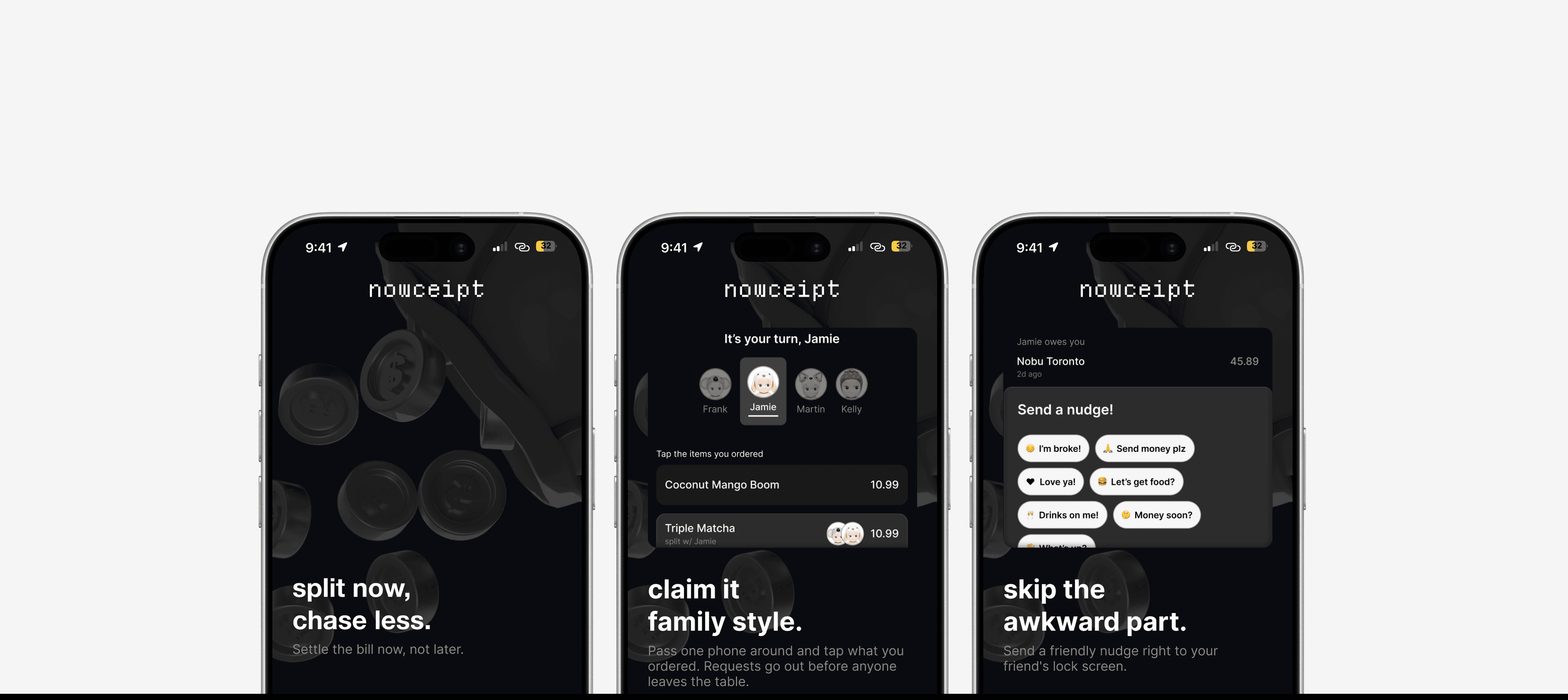
nowceipt
Split the bill now, not later.
DESIGN DECISION
claiming, family style
One phone goes around the table since everyone is already together, and claiming items is turn-based. So, not everyone needs the app, the split is done before everyone leaves the table, and the payer isn't the one doing everything.
The problem we found was social, so the solution treats it as one too, bringing everyone together - same as how the meal happens!
DESIGN DECISION
skip the awkward part
Instead of having to type out an awkward ask, we made reminding fun with buttons that send friendly notifications to your friends' lock screen.
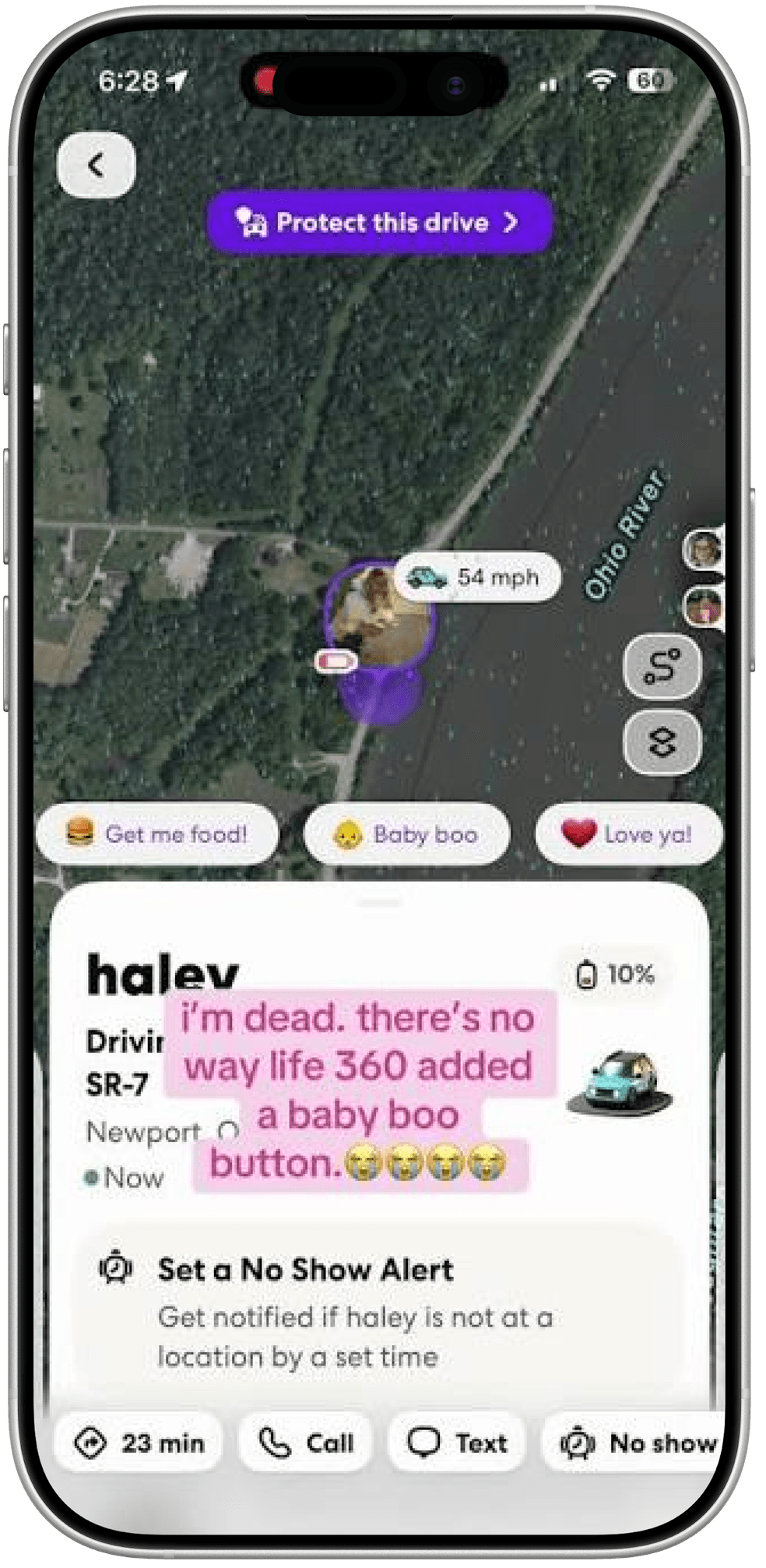
This is inspired by Life360: people spam notify their friends affectionately simply when they're bored. We wanted to bring that level of unseriousness to something more serious, like getting your money back.
NEXT STEPS
interac integration
Canada doesn't have an app that splits and pays in one place like Venmo in the US. However, Interac doesn't let third-party apps prefill a request into someone's bank, so the solution would be to build around Interac's existing ecosystem.
The next step is letting people link a bank or Interac account and choose how they pay, and for anyone without the app, sending the request as a text with a link instead.
REFLECTION
my first time leading design
Being a fairly new designer myself, I took a leap to lead a team of first-time product designers through the end-to-end UX process, leading what I just learned through my mentorship the term before. It really pushed me in my design journey to have to explain and lead something I was still exploring myself!
journey > outcome
This was something I lived by, prioritizing the team getting their feet wet with space to learn in every step of the design process over shipping the most polished thing possible.
This came with the tradeoff of less iteration and usability testing than what we would have liked, which is something I won't overlook and will be more deliberate about in my next adventure.